The inevitable shift: preparing enterprises for IPv6-only and beyond
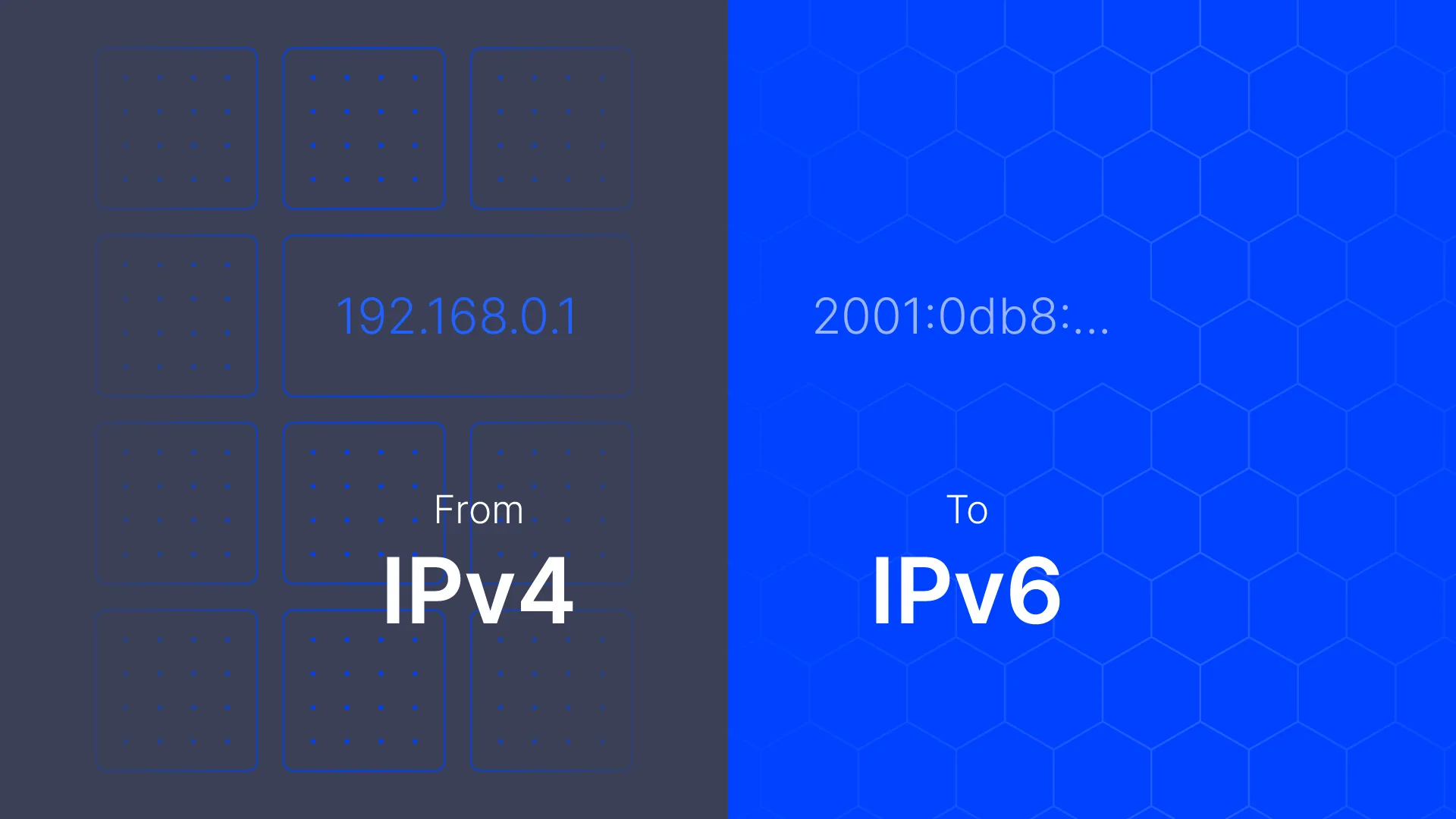
Every server, every phone, every device connected to the internet has an IP address: a “dotted quad” like the 192.168.0.1 that usually represents your home router. They’re defined by the IPv4 standard developed by network legends Vint Cerf and Bob Kahn, and they worked happily for many years.
The problem: IPv4 rolled out in 1983. A time when barely 200 devices were connected to what became the internet. Even as the decade of Big Hair and shoulder pads ended, there were fewer than 10,000 online … so IPv4’s “address area” of 4.3B seemed plenty. But today, 13.4B devices need an IP – and network operators are running out of ideas for squeezing them into that 32-bit space.
The solution has long been known (since 1998): it’s IPv6, able to label 2^128 devices with a unique hexadecimal code. That’d let you give every atom in the universe one, with plenty left over: lots of room for our little planet’s network to grow.
The trouble is that many devices – including, sadly, new ones still being sold – still use IPv4 to make sense of the network they’re on. And while they won’t “break” as such, many won’t be able to access resources in the Ipv6 space going forward.
This means the move from IPv4 to IPv6 isn’t some abstruse technical matter: it’s vital to the world’s future connectivity and economic growth. Here at GNX, we have deep experience with both … and an equally deep passion for helping our clients move to an IPv6 world safely and profitably.
This article explains how the change is happening and what the challenges are … and (of course) how we can help.
The limits of large numbers: why the world must move on from IPv4
Imagine you live in a city with a strange law: no building number can go above 100. The law was designed to keep doorplates cheap and easy to read. But years in, it’s had serious consequences.
Because no street can have more than 100 buildings, you’ll find waste ground and unusable land all over town, simply because nobody can build that 101st building. It limits the town’s population, hampers economic growth, stops businesses from investing, and skilled workers from moving in.
To get around the limit, many buildings swap and share the same addresses, creating havoc for the mail man. And numbers don’t flow logically: walk down the street and Number 10’s neighbor is Number 63, then next door are Numbers 5, 6, and 7, then a jump to 85. Planning a postal route is a nightmare. And those numbers may well change next week, so you’d better post those letters today.
It sounds crazy. But it’s exactly what happens with IPv4 addressing. Some time ago, they simply ran out of numbers, with the last block allocated in 2011. Network operators have been horse-trading blocks in a constant dance of reuse and repeat ever since. But the space for such trickery is shrinking fast, thanks to three big trends.
1. The network itself is growing …
While the internet’s population growth isn’t as fast as the 1990s, with around 5B people currently online, the number of “IP addresses needed per person” is expanding much faster.
At the birth of the World Wide Web (how quaint that term sounds) in 1995, a single address “served” 100 people, one connection covering a whole office or school. Twenty years later, we reached parity, with one IP per human. And today, it’s beyond a statistic: everyone has a phone, a laptop, an Xbox, a work computer. Needing many addresses per person.
2. … and the structure of the internet is changing
Growth isn’t just due to human screen addiction, though. Many IP addresses today label devices no human ever sees: the small, often simple sensors and switches of the Internet of Things, or IoT.
An industrial greenhouse may have a sensor monitoring every plant. A downtown skyscraper may have thousands in its windows, doors, and walls. Even a normal home may have a hundred-plus, as the router talks to the doorbell and the Alexa box talks to the Smart TV. There’s no option to *not* be connected; applications depend too heavily on communication, collaboration, and cloud services. If it’s unable to speak IP, a device can’t play the game.
3. The global economy demands more IP connectivity
Technology is the driver of economic growth, and countries worldwide are promoting the development of Smart Cities, Smart Energy Grids, Smart Vehicles and Homes, and so on. If an initiative has “Smart” in it, you’ll find IP addresses not far away.
The limited address space of IPv4 is a bottleneck for all this Smart stuff. IPv4 can’t keep up with the explosion of mobile devices – essential for the Smart future. And as the tactics get more desperate, routing efficiency goes down, affecting things like latency and packet loss negatively.
I’ve got my IPv4 addresses – why can’t I just keep using them?
If you’re the proud owner of a block of IPv4, here’s the short answer: you can. But only in the same way as you can keep using a horse as everyday transport. It’ll work, but Dobbin will be limiting your transport options.
IPv4 addresses look like 192.168.0.1; IPv6 like 2001:0db8:85a3:0000:0000:8a2e:0370:7334. They’re different protocols from different times, and a device that handles IPv4-only can’t understand an IPv6 one. (There are workarounds, though.)
While most resources on the internet, clouds, and private networks today have some method of translating between the two, with names like NAT64 and SIIT, that won’t last forever.
Navigating the journey to IPv6: challenges and transition strategies
So, for those thinking of staying in the IPv4 world – beware. That world is fading away. But how do you get to the new one? Here’s a checklist.
- Inventory your IT estate. This is the first step – and don’t limit it to the Big Iron in your datacenter. If your business depends on IoT, check the devices you use: many smaller, cheaper sensors and actuators are IPv4-only. Other devices will have both IPv4 and IPv6 capabilities – but this isn’t necessarily good: the friction may show up in your latency metrics. Remember: it’s not about “keeping up with the times”, it’s about staying competitive and cost-efficient.
- Assess your IPv6 readiness. Once you’ve got that inventory, categorize those devices by type: servers, workstations, network components, IoT nodes. Document their current IP capabilities and configurations. Then evaluate the IPv6 support of each device, system, and application, and ask the question: if the world moved to IPv6 tomorrow, would this device function? Also, remember to check skill levels within your team: while every network engineer knows about IPv6, they may not have participated in a migration before.
- Develop a migration strategy. Work out the most realistic approach based on your inventory and assessment. Will you go the dual-stack route, or focus on IPv6-only? There’ll be different timelines and resource requirements for each – make sure you choose the right one for your situation.
- Design your IPv6 architecture. If you’re enterprise-scale – perhaps even if you’re not – you’ll need to plan a network topology and addressing scheme, which may not be straightforward. Will it create the efficiencies that make it a good investment; are all devices (including employee-owned ones) compatible? Plenty of questions need to be answered.
- WAN connectivity. Remember to check if your WAN link even supports IPv6, and if so, is it enabled by the ISP?
- Implement the new scheme. This is where you enable IPv6 on routers, switches, and firewalls and configure all IPv6 addressing and routing. Server and application configurations need setting too, before the big switch-on. Also, plan for updating all your DNS, DHCP, and other services to support IPv6.
- Test your new IPv6 infrastructure. Next, verify that all devices can communicate over IPv6; check for bottlenecks and logjams in your routing data and take note. Moving from IPv4 to IPv6 isn’t simply rolling out one service in the footprint of the previous one.
- Monitor … and optimize. Obviously, keep looking at your network traffic for any issues – but also look for opportunities. More efficient routing, greater security where needed, and smoother integration between land-based, air-based, and even spaceborne connectivity options when they interconnect. All are possible.
It sounds like hard work – and it can be. But there are ways to minimize the hassle. Let’s look at how the GNX approach puts our shared IPv6 future front and center.
How GNX helps future-proof your network with seamless IPv6 integration
GNX, with our GNX+ automated platform, offers a shortcut. It lets you choose from over 3,000 partners worldwide, integrating them into a single network underlay with a single contract – but you probably knew that already. What you may not know is that it also gives you the option to filter those providers by criteria like IPv6 readiness … ensuring that whatever partners you choose for your connectivity, they’ll be compatible with your IPv6 plans.
There are other backups, too. GNX now includes IPv6 configurations by default for all customer orders, even if you don’t explicitly ask for them. Because we know the world is moving to IPv6 – and doing this automatically is a great way to help you with that move.
Related blog: Time to move on: migrating your global networks is easier than you think
Here to take that migration weight off your shoulders – or any weight, really, when it comes to global connectivity.